Leah Mahan Productions

Turkey Creek


TURKEY CREEK tells the story of a handful of determined Mississippians who have struggled to save their endangered community in the wake of Hurricane Katrina. Derrick Evans and his family and neighbors are descendants of emancipated slaves who settled on the Gulf Coast in the 1860s. They have been stewards of Turkey Creek’s rich wetland habitat for generations, where they farmed, fished, hunted and were baptized. Today, the Turkey Creek watershed lies at the center of the sprawling city of Gulfport - Mississippi’s fastest-growing urban area. The threat of encroaching sprawl spurred by the gaming industry in the 1990s and the devastation of Katrina in 2005 mobilized members of this insular, self-sufficient community and made them citizen activists on a regional and national level.

Click here to learn about THE BRIDGE PROJECT.

TURKEY CREEK is the compelling story of a fragile yet resilient community fighting to preserve its ancestral land and way of life as a city grows rapidly around it. The film is also the story of one man’s struggle to come to terms with the meaning of home and community.

There’s something about a place that you grew up in. Like the buttercups, palmetto trees, magnolias. That’s a part of you. You can’t take that away.

- The Rev. Harry Tartt

Before Hurricane Katrina, TURKEY CREEK was a dramatic story about the Old and New South colliding. The story began when the community cemetery was bulldozed for commercial development and an elderly white mayor called his constituents “dumb bastards” for standing in the way of a 1,300-acre development in the Turkey Creek watershed. The outrage over these offenses led to a strong coalition among communities in the watershed and national environmental and civil rights groups. The development proposal was defeated and in the spring of 2005 all nine candidates running for mayor said they would support the creation of a landtrust and greenway to protect the watershed.

In the aftermath of Katrina, the physical and political landscapes in Gulfport have been dramatically transformed. Since the first days after the storm, when FEMA had yet to arrive, there has been a clear inequity in the recovery effort in Mississippi and signs of a broad trend of displacement on the Gulf Coast. In Gulfport, many African American homeowners without insurance cannot afford to repair or rebuild their homes, and many low-income tenants remain without affordable housing. Not long after the storm, the new mayor of Gulfport told the Washington Post that national attention from Katrina increased land prices on the beach by 50 percent. Weeks after the storm, residents learned that the Governor’s Commission on Recovery, Rebuilding and Renewal had cited the nexus of the region’s economic renewal in the Turkey Creek watershed. Oxfam America said that low-income residents on the Gulf Coast were “being squeezed out by demolition and redevelopment.” In February 2008, FEMA admitted that the trailer homes it had provided to survivors contained formaldehyde, a carcinogen. The 100,000 hurricane evacuees still living in 38,000 trailers were directed to leave. But no alternative affordable housing was proposed.

I’ve always had it in my mind that somehow someday I would tell this story — the Turkey Creek story. If I’m not careful, if Turkey Creek is not careful, it may be like an obituary.

- Derrick Evans, founder of Turkey Creek Community Initiatives

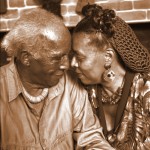
Derrick Evans, 2001

Derrick Evans, 2001

Hurricane Katrina pulled back a mask that hid realities of poverty and race in America. Many low-income African American communities were severely damaged or destroyed. Who will be at the drawing table when these communities are rebuilt or replaced? Through the voices of Gulfport residents, officials and activists with radically different points of view, TURKEY CREEK will explore the dynamics shaping the New South. The film will convey a message of perseverance and hope in the midst of so much devastation.

In conjunction with the production of TURKEY CREEK, a related digital initiative called THE BRIDGE PROJECT is in development. THE BRIDGE PROJECT is an effort to lift up voices from the Gulf Coast. Through a network of relationships between social justice organizations and media-mentor organizations, THE BRIDGE PROJECT aims to empower Gulf Coast communities to tell their own stories and assist them in the creative distribution of these stories to effect change. THE BRIDGE Web site will feature digital storytelling resources and a Gulf Coast map, from which visitors can find and upload videos about citizen-led efforts to create a just and sustainable future.  MORE…

dsc_4624-1

"Turkey Creek" field producer ReMale James

The production of TURKEY CREEK has been supported by the W.K. Kellogg Foundation, Just Media Fund, the LEF Foundation, the Nu Lambda Trust, the Winograd-Hutner Family Fund, Diana Patrick and Amelie Ratliff.

Watch a clip of TURKEY CREEK on the “Bill Moyers Journal” site. The producer of a segment titled “Katrina Recovery Gone Wrong?” interviewed filmmaker Leah Mahan.

Make a contribution o support the creation and distribution of TURKEY CREEK. The film is a nonprofit project of the Center for Independent Documentary, so your donation is tax-deductible.